Wenn Sie auf "Akzeptieren" klicken, stimmen Sie der Speicherung von Cookies auf Ihrem Gerät zu, um die Navigation auf der Website zu verbessern, die Nutzung der Website zu analysieren und unsere Marketingaktivitäten zu unterstützen. Weitere Informationen finden Sie in unserer Datenschutzrichtlinie.
In Luzern stellten sich führende Köpfe aus Wirtschaft, Politik und Wissenschaft der Frage, warum Europa an Einfluss verliert – und wie es ihn zurückgewinnen kann. An den beiden Tagen im KKL wurde klar: Die Zeit der Ausreden ist vorbei, und Europa steht unter Zugzwang.
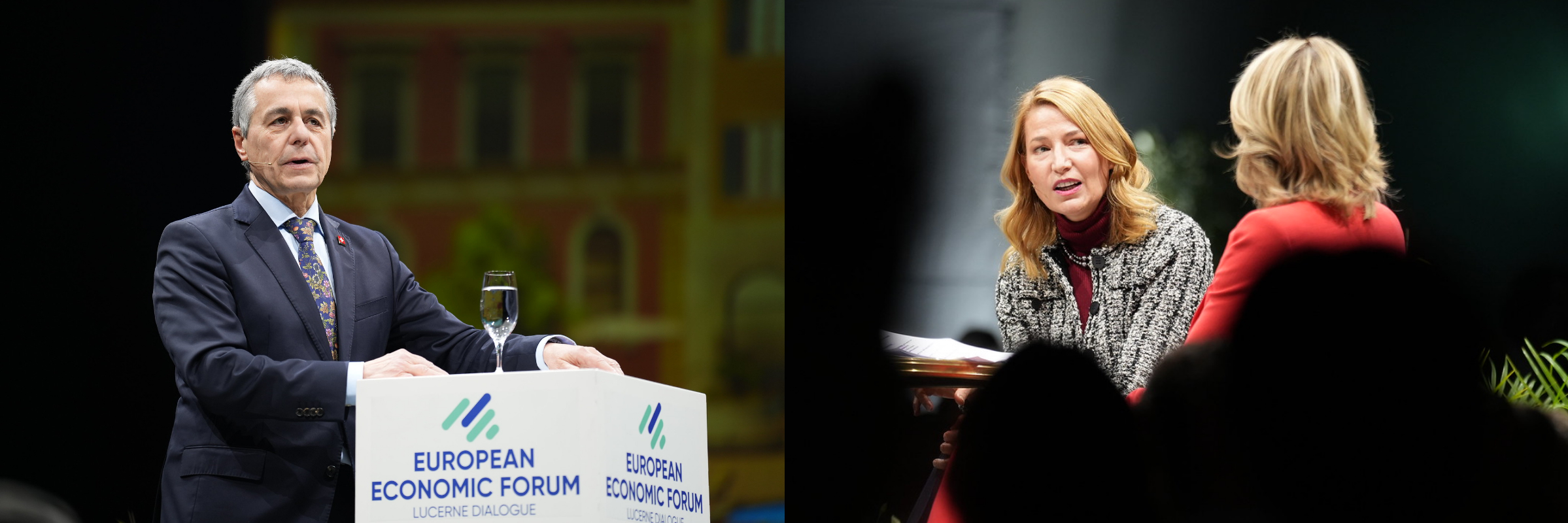
Bundesrat Ignazio Cassis eröffnete das Forum mit einer Botschaft, die einfacher nicht hätte sein können: Die Schweiz steht mittendrin – nicht daneben. Europa sei für die Schweiz keine Option, sondern ein durch die Geografie vorgegebenes Schicksal. Globale Konflikte, zerbrechliche Demokratien, wirtschaftliche Verwerfungen: All das treffe auch ein Land, das sich gern als stabil und neutral sieht. Cassis erinnerte daran, dass die Schweiz von Europas Stärke lebt – und von seiner Schwäche bedroht wird.
Danach sprach Suzanne Heywood, COO Exor Group, über Resilienz – ein Wort, das sie sehr lebendig erklären kann. Ihre Jugend hat sie auf einem Segelboot verbracht, weit weg von jeder Notfallnummer. Dort lernte sie in brenzligen Situationen Ruhe zu bewahren. Gute Führung zeigt sich für Heywood nicht im Sonnenschein, sondern im Sturm. Dabei hilft es, die Dinge ins Verhältnis zu setzen: «Resilience is the ability to see things in proportion, and therefore, to be, not to overreact to the smaller things.»
Wettbewerbsfähigkeit als Überlebensfrage
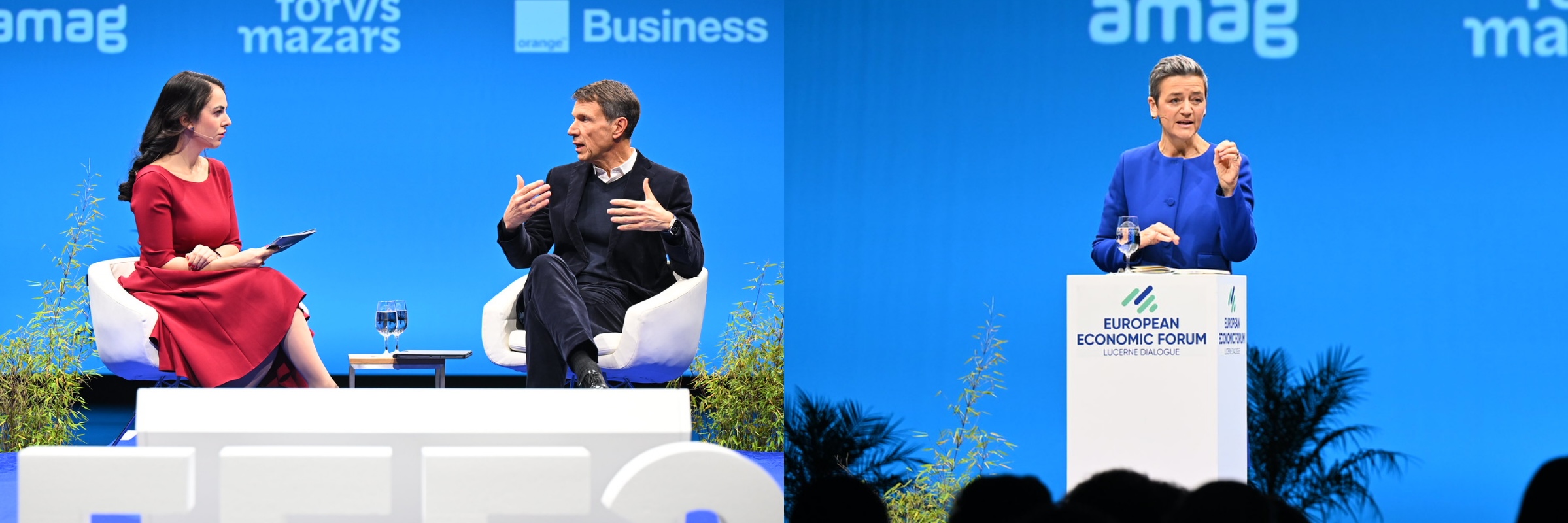
René Obermann, Vorsitzender von Airbus SE, setzte den Ton für den zweiten Tag. Sein Appell: Europa muss wieder mutig werden. Airbus zeige, was möglich ist, wenn Länder Zusammenarbeit über Eifersucht stellen. Ein Unternehmen dieser Grössenordnung entstehe nicht aus Vorsicht, sondern weil man sich etwas getraut habe. Obermann forderte, industrielle Stärke wieder als strategische Aufgabe zu begreifen, nicht als Anhang der Politik. Und zwar sofort, denn es geht um Europas Sicherheit. Hier nimmt er auch Unternehmer:innen in die Pflicht: «If business leaders don’t speak up, political leaders can’t act. Our voices matter.»
Margrethe Vestager, ehemalige Vizepräsidentin der Europäischen Kommission, nahm den Faden auf. Die globale Dynamik hat sich gewandelt: «We no longer live in stable disorder. We live in accelerating, unpredictable disorder.» Europa ist gut beraten, den damit einhergehenden Wandel aktiv zu gestalten. Wettbewerbskraft ist für die einstige Wettbewerbskommissarin eine Überlebensfrage. Wer zu lange reguliert, hemmt. Wer zu lange zweifelt, verliert. Europa müsse aufhören, Innovation zu misstrauen. Ihr Satz blieb hängen: Nichts kostet Europa mehr als Zögern.
Deep Dives in zentrale Themen
Am Vormittag folgten Sessions, die den Puls der Gegenwart fühlbar machten: Wie bewegen wir Menschen und Güter in einer Welt, die klimafreundlicher, aber schneller werden muss? Wie führt man Organisationen, wenn alte Gewissheiten bröckeln? Welche Rolle spielt künstliche Intelligenz, wenn Macht immer stärker aus Daten entsteht? Und was bleibt von Europas Einfluss, wenn politische Verwerfungen selbst wirtschaftliche Partner verunsichern?
Im Anschluss ging es um Demokratie – nicht als Abstraktum, sondern als Alltagspraxis: Democracy Days als Siegerprojekt des EEF-Hackathons zeigt, wie Firmen ihre Mitarbeitenden stärken können, sich einzubringen. Denn Demokratie lebt davon, dass Menschen sie üben.
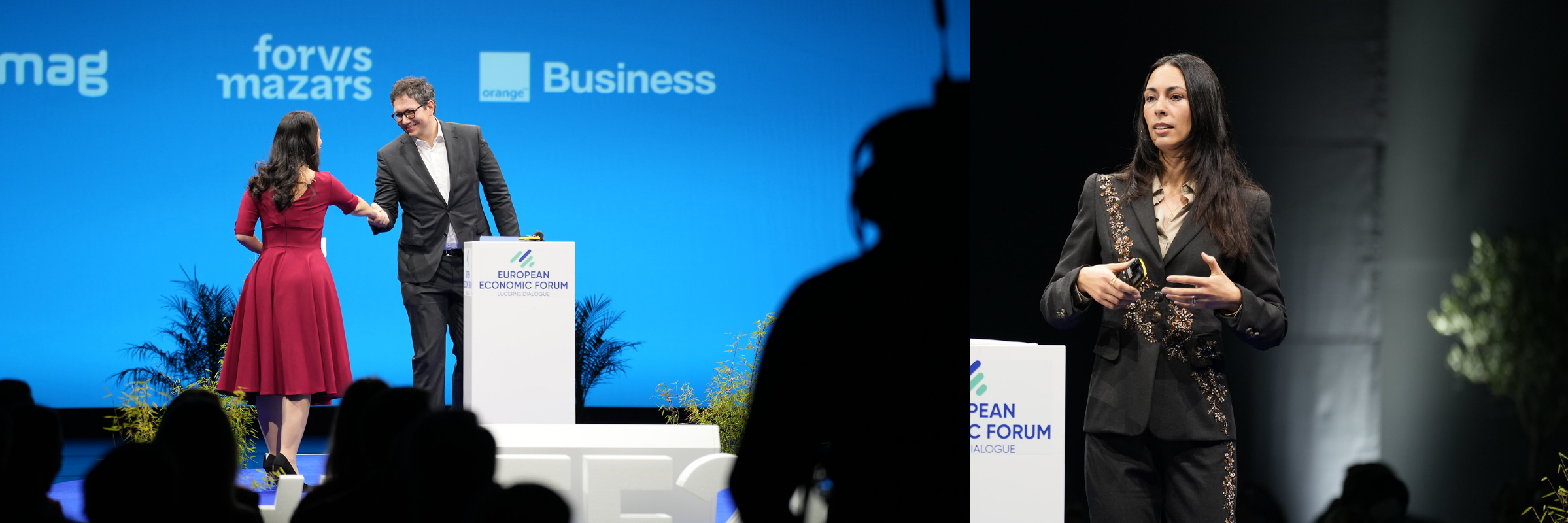
Dann trat Gaya Herrington, Vize-Präsidentin Sustainability Research bei Schneider Electric, auf die Bühne – und stellte die Wachstumsfrage neu. Sie sprach nicht vom Ende des Wohlstands, sondern vom Umbau unseres Verständnisses. Wohlstand sei mehr als Konsum. Europa könne vorangehen, indem es Erfolg neu misst: durch Stabilität, Lebensqualität, gesunde Ressourcen.
Risk Management und bitter nötiger Mut
Wie rasch politische Schocks globale Lieferketten verschieben, zeigte Stefan Paul, CEO von Kuehne+Nagel. Der Einbruch chinesischer Importe nach US-Zöllen um 50 Prozent binnen drei Wochen machte deutlich: Handelsrouten sind hochsensibel. Europa verliert in dieser Dynamik an Boden, so Paul – Zukunftsindustrien würden längst von den USA und China dominiert. «Europe was the powerhouse — but we no longer dominate the industries of the future.» Wer Schritt halten will, müsse sich an Wachstumsmärkten orientieren, Risiken managen und Partnerschaften neu denken.
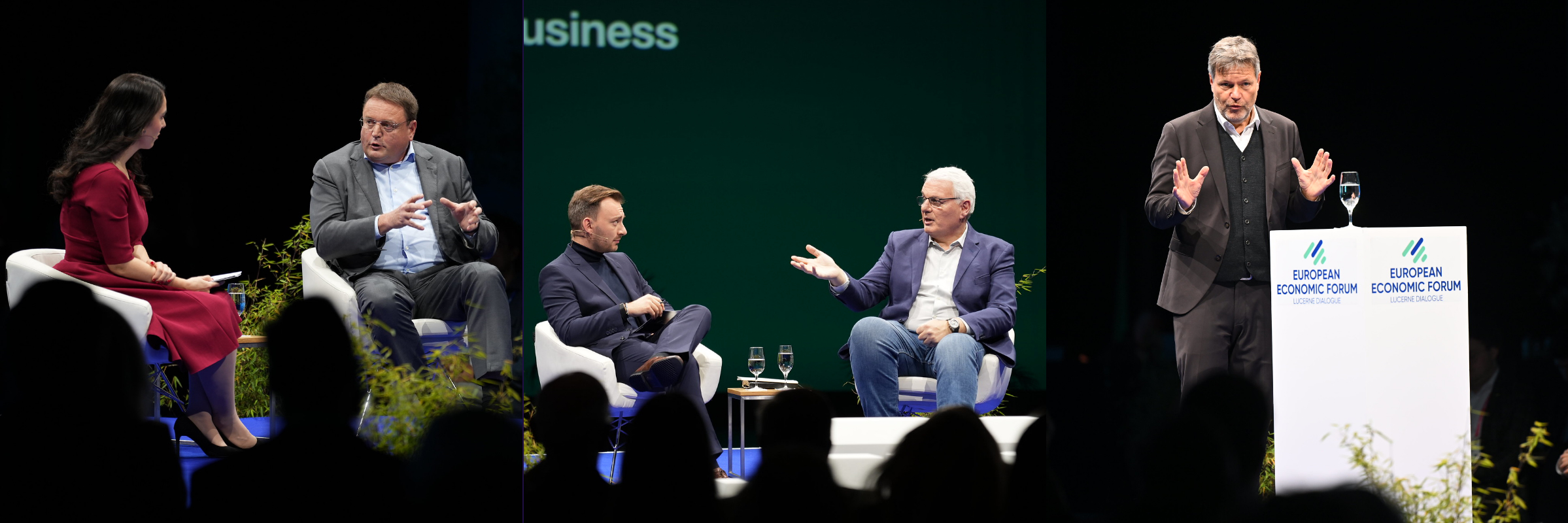
Um Risiken ging es auch dem Autor und Kurator Bruno Giussani. Europa ist digital abhängig, so Giussani, und Abhängigkeit frisst Handlungsfreiheit. Plattformen, Datenströme, Software: Vieles liegt heute ausserhalb europäischer Kontrolle – und ist vor allem in den Händen von teilweise zweifelhaften US-Konzernen. Giussanis Appell war klar: Wer souverän sein will, muss sich die digitale Macht zurückholen. Damit büsse man vielleicht 10 Prozent Komfort ein, gewänne aber 100 Prozent digitale Souveränität.
Den Abschluss bildete die «Lucerne Speech» des ehemaligen deutschen Vize-Kanzlers und Wirtschaftsministers Robert Habeck. Darin sprach er offen über Europas Einsamkeit in der Welt – und die Bedrohung durch autoritäre Regimes, die gut koordiniert zusammenarbeiten und die Idee eines geeinten Europas ablehnen. Europa könne sich nicht länger darauf verlassen, dass andere für seine Sicherheit sorgen. Wirtschaftliche Stärke, militärische Verlässlichkeit, politische Entschlossenheit – all das müsse zusammenfinden. Und es braucht Mut: «We need more visionary thinking. The old world is gone, and no one will hand Europe a role in the new one.» Jetzt zählt, was Europa selbst tut.
Weckruf für Europa
Das EEF25 war ein Warnsignal – und ein Versprechen. Die Warnung: Europa wankt und verliert kostbare Zeit. Das Versprechen: Es kann seine Kraft zurückgewinnen, wenn es sich traut. Alle Rednerinnen und Redner sprachen von Mut, Klarheit und Tempo. Europa hat die Fähigkeiten, die Menschen und die Institutionen. Jetzt muss es den koordinierten Willen aufbringen, all das zu nutzen.

_web.jpg)