Wenn Sie auf "Akzeptieren" klicken, stimmen Sie der Speicherung von Cookies auf Ihrem Gerät zu, um die Navigation auf der Website zu verbessern, die Nutzung der Website zu analysieren und unsere Marketingaktivitäten zu unterstützen. Weitere Informationen finden Sie in unserer Datenschutzrichtlinie.
By clicking “Accept”, you agree to the storing of cookies on your device to enhance site navigation, analyze site usage, and assist in our marketing efforts. View our Privacy Policy for more information.
Wenn das Auto zum System wird: Die nächste Phase der Mobilität
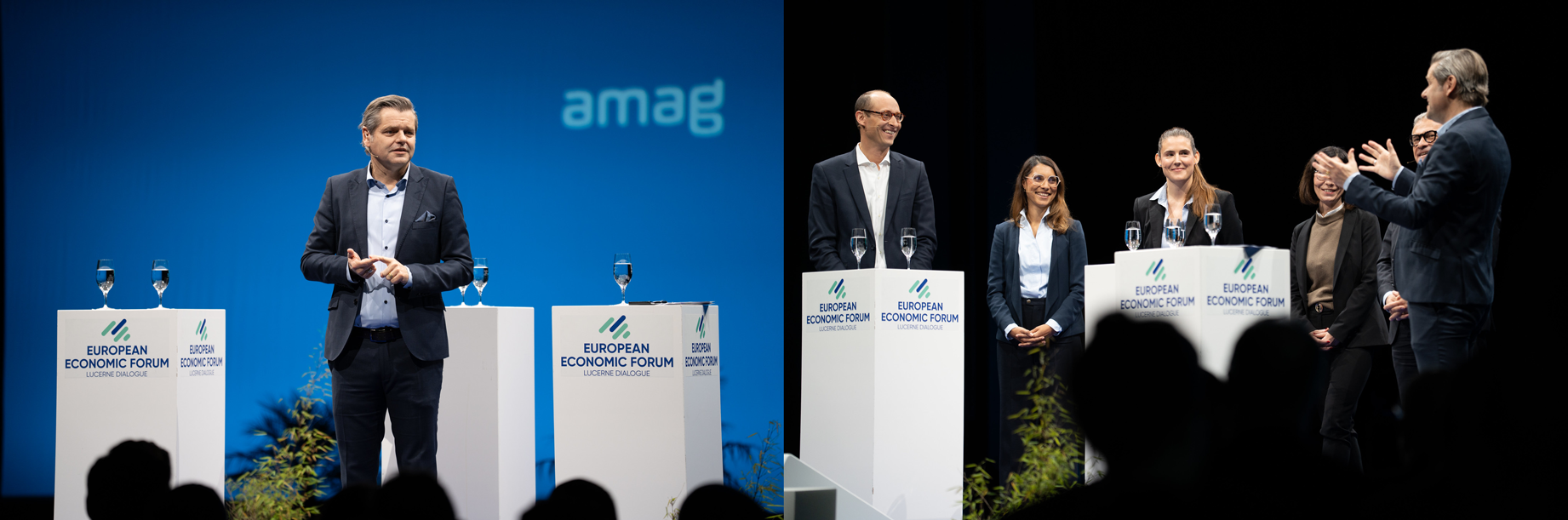
Die Mobilitätsbranche steht vor einem Strukturwandel. Elektrifizierung, Digitalisierung und autonomes Fahren verändern nicht nur Antriebstechnologien, sondern stellen Geschäftsmodelle, Regulierung und Infrastruktur grundlegend infrage. In einer von AMAG ermöglichten Session am European Economic Forum diskutierten Vertreter:innen aus Industrie, Politik und Mobilitäts-Start-ups, wie dieser Übergang gelingen kann.
Moderator Urs Gredig eröffnete die Runde mit einem Befund, der die Ausgangslage präzise beschreibt. Die Automobilbranche stehe gleichzeitig vor drei Transformationen: dem Wechsel vom Verbrenner zum Elektrofahrzeug, dem Übergang von Hardware zu Software sowie dem Schritt vom selbst gefahrenen Auto hin zur autonomen Mobilität. Jede dieser Entwicklungen bringe eigene technologische, regulatorische und gesellschaftliche Herausforderungen mit sich.
Sabrina Steiner, Senior Vice President Strategy bei MOIA (Volkswagen Autonomous Mobility), betonte, dass autonomes Fahren inzwischen technologische Realität sei. «Wir sehen in China und den USA, dass die Technologie da ist, gut funktioniert und sehr gut angenommen wird.» In Europa verlaufe die Einführung langsamer. Nicht aus technischer Schwäche, sondern wegen hoher Sicherheits- und Zulassungsanforderungen. «Europa ist der heilige Gral», so Steiner, «weil hier Sicherheit und Regulierung besonders ernst genommen werden.» Autonomes Fahren könne langfristig zu deutlich weniger Verkehrsunfällen führen.
Stefanie Berliner, Head of DACH beim dänischen Anbieter Holo, warnte jedoch vor überzogenen Erwartungen. Vollautonomes Fahren auf Level 5 sei «noch lange nicht Realität». Der entscheidende Entwicklungsschritt liege derzeit bei Level 4: fahrerlose Fahrzeuge in klar definierten Einsatzgebieten, ergänzt durch menschliche Fernüberwachung. Autonomes Fahren sei dabei weniger eine isolierte Technologie als vielmehr ein Instrument zur besseren Integration von Individualverkehr und öffentlichem Verkehr. «Es ist eine Chance, Silos zu durchbrechen und Mobilität neu zu denken.»
Aus politischer Sicht unterstrich Nationalrat Martin Candinas (Die Mitte), dass Innovation nur mit verlässlichen Rahmenbedingungen funktioniere. «Wir müssen für gute Voraussetzungen sorgen, damit solche Unternehmen in der Schweiz Geschäfte machen können.» Zentral seien stabile Investitionen in Infrastruktur: «Wenn wir bei Schiene und Strasse sparen, verschulden wir uns bei künftigen Generationen.» Die Schweiz habe mit separaten Fonds für Strasse und Schiene international eine Vorbildlösung, die nicht ausgehöhlt werden dürfe.
Helmut Ruhl, CEO der AMAG Group, zeichnete ein differenziertes Bild der Automobilindustrie. Die Branche befinde sich «mitten in einem der zehn Jahre, in denen sich mehr verändert als in den hundert Jahren zuvor». Trotz aktueller wirtschaftlicher Dellen sei der Transformationsprozess notwendig. Und AMAG macht vor, dass man auch unter schwierigen Vorzeichen wettbewerbsfähig bleiben kann: «Wir werden dieses Jahr in einem sehr schwachen Markt mit dem zweithöchsten Marktanteil überhaupt abschliessen.» Autonomes Fahren könne bei ausreichender Skalierung ein «Game Changer» werden, da Kosten pro Kilometer um bis zu 80 Prozent sinken könnten.
Judith Häberli, Co-Founder von Urban Connect, lenkte den Blick auf Unternehmen als Hebel für neue Mobilitätsmodelle. Arbeitgeber könnten multimodale Lösungen schneller durchsetzen als öffentliche Stellen. «Wenn Angebote zuverlässig, kosteneffizient und nutzerfreundlich sind, ist die Bereitschaft hoch.» Gerade autonome Shuttle-Lösungen könnten künftig Lücken in der ersten und letzten Meile schliessen.
Einigkeit herrschte darüber, dass autonomes Fahren nicht zwangsläufig zu mehr Verkehr führen müsse. Entscheidend sei der strategische Einsatz. «Die Sorge ist berechtigt», sagte Berliner, «deshalb braucht es ein Zusammenspiel von Politik, Städten und Unternehmen.» Autonome Mobilität könne helfen, Fahrzeuge effizienter zu nutzen, Parkflächen zu reduzieren und Verkehr besser in bestehende Systeme zu integrieren.
Die Mobilität der Zukunft wird demnach nicht durch Technologie allein entschieden. Sie erfordert auch politisches Commitment, wirtschaftliche Kooperation und gesellschaftliche Akzeptanz. Und den Willen, Mobilität nicht länger in getrennten Systemen zu denken, sondern als integriertes Ganzes.
When the Car Becomes a System: The Next Phase of Mobility
The mobility sector is undergoing a profound structural shift. Electrification, digitalisation and autonomous driving are not only transforming powertrain technologies; they are fundamentally reshaping business models, regulation and infrastructure. In a session hosted by AMAG at the European Economic Forum, representatives from industry, politics and mobility start-ups discussed how this transition can be successfully managed.
Moderator Urs Gredig opened the discussion with a diagnosis that neatly captured the starting point. The automotive industry, he noted, is facing three transformations at once: the shift from combustion engines to electric vehicles, the move from hardware to software, and the transition from human-driven cars to autonomous mobility. Each of these developments brings its own technological, regulatory and societal challenges.
Sabrina Steiner, Senior Vice President Strategy at MOIA (Volkswagen Autonomous Mobility), emphasised that autonomous driving has already become a technological reality. “We see in China and the United States that the technology is there, it works well and is being very well received.” In Europe, adoption is progressing more slowly – not due to technological shortcomings, but because of stringent safety and approval requirements. “Europe is the holy grail,” Steiner said, “because safety and regulation are taken particularly seriously here.” In the long term, autonomous driving could significantly reduce the number of traffic accidents.
Stefanie Berliner, Head of DACH at the Danish autonomous mobility provider Holo, cautioned against inflated expectations. Fully autonomous driving at Level 5, she stressed, is “still a long way off.” The key development step today lies at Level 4: driverless vehicles operating in clearly defined areas, supported by human remote supervision. Autonomous driving, Berliner argued, should be seen less as a standalone technology and more as a tool to better integrate individual and public transport. “It is an opportunity to break down silos and rethink mobility.”
From a political perspective, Martin Candinas, Member of the Swiss National Council (Die Mitte), underlined that innovation depends on reliable framework conditions. “We must ensure the right conditions so that such companies can operate successfully in Switzerland.” Stable investment in infrastructure is essential: “If we cut spending on rail and road, we are effectively indebting future generations.” Switzerland’s separate funding mechanisms for road and rail, he noted, are regarded internationally as a model that must not be weakened.
Helmut Ruhl, CEO of the AMAG Group, offered a nuanced assessment of the automotive industry. The sector, he said, is “in the middle of one of those ten years in which more will change than in the previous hundred.” Despite current economic headwinds, the transformation is unavoidable. AMAG, Ruhl argued, demonstrates that competitiveness is possible even under difficult conditions: “This year, in a very weak market, we will achieve the second-highest market share in our history.” At sufficient scale, autonomous driving could become a genuine “game changer”, with costs per kilometre potentially falling by up to 80 per cent.
Judith Häberli, Co-Founder of Urban Connect, shifted the focus to companies as key enablers of new mobility models. Employers, she argued, can implement multimodal solutions faster than public authorities. “If offerings are reliable, cost-efficient and user-friendly, willingness to adopt them is high.” Autonomous shuttle services, in particular, could help close gaps in first- and last-mile transport.
There was broad agreement that autonomous driving does not necessarily lead to increased traffic volumes. What matters is strategic deployment. “The concern is justified,” Berliner said, “which is precisely why collaboration between policymakers, cities and businesses is essential.” Autonomous mobility has the potential to increase vehicle utilisation, reduce the need for parking space and better integrate traffic into existing systems.
The discussion made clear that the future of mobility will not be decided by technology alone. It will also require political commitment, economic cooperation and social acceptance – along with the willingness to move beyond fragmented systems and think of mobility as an integrated whole.

_web.png)